Showing posts with label round robin. Show all posts

Wednesday, 19 January 2011

The Home Stretch


And so we reach the end of the MNW Round Robin. Sob. I’ll try to hold myself together for these final questions from Suroopa to me.


You are a fairly prolific and well published short story writer. Do you write them as and when a story idea strikes you or do you write many of them together with a common theme in mind? Are they linked to your novels? Do they remain a secondary form that nevertheless occupies a distinct imaginative landscape?

I get less and less short story ideas now. They all seem to get sucked into the novels, and that’s fine, but I do wish I could bash out a shortie once a week, as I used to. Quite often I don’t have an idea of what’s going to happen when I start writing a short story (or a novel, for that matter) so I wing it, and sometimes it works. I usually have a voice in mind, and that’s the only starting point. There’s never a theme or a planned collection.

The good thing about short stories is the amount of freedom they give me to make mistakes, and to write in other genres and styles. I can’t sustain anything very serious for too long, but I have written some literary short stories that I’m quite proud of. It’s also an excuse to push comedic elements to their limit, into slapstick sometimes, as with a piece like Spitting Wasps. And that story directly led to the character of Pru from Light Reading. But, you’re right, short stories are a secondary form to me, and they fit in around the novels, or not at all. And I have written a few short stories set in my seaside town of Allcombe but they never seem quite right. So yes, they must flow from a very different place, and that’s probably why I write them. They allow me to be a horror/sci-fi/slapstick,serious writer, which suits me very well. Talking of which…


Your novels do not seem to fit a distinct genre. Is that by choice? Does it work to your advantage? Do you write with sequels in mind?

It’s absolutely not by choice. I would love to fit, to be honest, because then I’d be more marketable. But the moment I try to write with a genre specifically in mind it all goes flat and boring for me. I think I’m constantly trying to entertain myself when I write. I aim to take myself, let alone the reader, by surprise. This is not conducive to how modern bookselling works. Publishers want a synopsis before you’ve begun writing, and they want you to fit on a certain shelf. I can understand that. I just can’t do it.

Here’s a snippet of a conversation I once had with a publisher:

Pub: I want you to go free! I see you as genreless! Just use that quirky, imaginative style of yours and don’t be concerned about where it leads, okay?

Me: So can my characters go into space, then?

Pub: No.


This kind of sums up my writing career so far.


How do you relate to your characters? Do you visualise them in their entirety or do they take you by surprise? I find that you portray strong and rather intriguing women. You also have a strong sense of place. How instinctive are you as a writer? How do you research a place? What sort of readership do you want for the women you create?

For me it’s all about the characters, but they’re like real people in that no matter how well you think you know them, there’s always something new up their sleeves. And they are all products of place. I mainly research a place by living there. Luckily, I’ve lived in a lot of places so I have a few to choose from. They are never exactly the same in my imagination; you couldn’t draw a street map from my version and have a clue where you were standing if you took a day trip there. But I like the pretend and the real version to sit side by side. I don’t see why I have to be accurate.

I don’t tend to think about a certain type of person reading my books. Right now my offspring, the Munchie, is obsessed with what girls like to do and what boys like to do. I keep telling her that it’s perfectly okay to like Spiderman and fairies, but she’s not having it. I hope that anyone could enjoy my books, not just girls or boys. I’m not really a big fan of the whole ‘books for women by women’ thing. Or that only men should like Michael Moorcock or Iain M Banks. If you like it, you like it. If you don’t, I didn’t write it with you in mind.

And finally, what is it about veggies that fascinates you?

I have to admit I don’t find vegetables that fascinating. I needed something to blog about, so I started listing the contents of my veggie box, and people seemed to enjoy it so I carried on doing it. Then, when Neil Ayres (ex-blog-buddy) redesigned our blog, he called it The Veggiebox. I felt I had to deliver more vegetable-based articles, so I started looking for vegetables in novels that I read, and I began to feel that all the novels I really liked had vegetables in them. And the ones that weren’t so good showed a distinct lack of veg. I don’t know why that is; maybe it’s indicative of a level of detail that I prefer in writing. I like to know what characters are eating and growing and placing in their fruit bowls and lunchboxes.

Vegetables (or fruit) make for a better novel. It’s my theory and I’m sticking to it.


Thanks Suroopa for the excellent questions, and thank you to everyone who took part or read along. Phew! And now we can slump back into our writerly slouches over our keyboards and get on with those novels. Chop chop everyone. There are onions out there to be sautéed, metaphorically speaking.

Monday, 6 December 2010

Still to Come

Another quick reminder of the Round Robin order. So far we've had:

Dee Swift
MFW Curran
Tim Stretton
Faye L Booth
Alis Hawkins
Ciara Hegarty
Doug Worgul
David Isaak
Ryan David Jahn
Eliza Graham

Still to come:

Frances Garrood
Brian McGilloway
LC Tyler
Suroopa Mukherjee
Aliya Whiteley

Monday, 8 November 2010

Round robin: why I gravitated towards the Victorian era.

So, after a bit of re-jigging of the round robin order, it's my turn, and Tim has asked me what attracted me to the Victorian era in particular, and whether I can see myself writing in other eras at some point.

The attraction of the Victorian era for me is a many-splendoured thing, and I think it has a lot to do with the fact that so many of my areas of interest can be found there. Because they seem quaint and dated to us, it's easy for us to forget this, but the Victorian era was one of tremendous progress: technologically, intellectually and socially. I'm a bit of a nerd and I love my gadgets (even if I don't always understand exactly what they're doing), and in the 63 years and seven months Victoria was on the throne, they made huge strides towards the understanding of the world we currently have today. There was Darwin's Origin of Species, of course - a massive 'eureka!' moment - and our practices of medical hygiene and surgical sterilisation took their first steps under Victoria. Of course, one of the vital ingredients for an interesting plot is to have some sort of change and turmoil rocking the boat of your character's life, and so to place them in an era in which so much is changing is helpful in achieving that.

However, I have a hypothesis that as a society becomes more technically advanced, it's as if they sometimes become a little frightened of the speed at which they're moving, and so they subconsciously put the brakes on in other areas, often by becoming - outwardly, at least - more socially conservative. This certainly seemed to be the case in many respects as far as the Victorians went, if you compare them to the 18th and early 19th C preceding them, which seem to modern eyes to have been more permissive than the Victorians who came next.

It is important, though, not to take this apparent primness at face value, because (as I have discussed ad nauseam on my blog), underneath that voluminous white underwear, the Victorians were a friskier generation of people than they probably would have wanted you, or the people next door, to have known about; and they were better at making moves towards social change than they might have admitted, too. The working class suffragists of the northern mill towns began their campaigning for the right to vote for all adults, male and female (as opposed to the rather more notorious suffragettes, who only seemed to care about well-off women being able to vote alongside their well-off male counterparts - don't mention the name Pankhurst to me around the time of an election unless you want a lengthy diatribe); and from 1874 it was possible for a woman to train as a doctor (although they did have to attend a women-only institution - the London School of Medicine for Women - to do so; and no doubt they would have faced prejudice from patients and other doctors once qualified). Those of you who know me will know I'm a soft touch when it comes to animals, and while the Victorian attitude to our non-human relatives was by no means ideal, again, they were making progress: the RSPCA1 was a Victorian invention, as was the Vegetarian Society. Oh, and apparently something called the NSPCC2 came about later in the Victorian era, too. (Internet disclaimer: don't take my tone too seriously there, will you?)

Anyway, you get the idea - it was a very confused, conflicted, neurotic era, so that's probably why it and I clicked. There's something very intriguing about a society that invents the camera and then immediately sets about making the first photographic pornography and taking pictures of the bodies of their dead relatives to keep in the family album; and yet as I say, over time the Victorians have still become grossly misunderstood by the majority of people, and had their already-pretty-damn-peculiar quirks exaggerated to mythic proportions; and I have an affinity with the misunderstood and the misinterpreted too that probably informs my interest in the period. On a purely shallow level, I think the Victorian era was more aesthetically beautiful than any period before or since - I love the clothes and the decor (the Victorian attitude to the latter being about as far from minimalism as you could manage, and no bad thing); and being a bodiceripper, I don't think it's beyond my remit to comment on how much better the men put themselves together then. Perhaps I've spent too much time looking at history books, but I think Prince Albert was a bit of all right in his day; and the other day I caught myself ogling a portrait of Elgar on the cover of Classic FM magazine. When I rule the world, football club shirts, baseball caps, tracksuits and trainers will be banned.

Finally (as far as the first half of Tim's question goes), I'm reminded of a quote that - if I recall correctly - is attributed to Stephen King; who, when asked why he wrote the types of stories he does, replied "what makes you think I have a choice?". In many ways, I think it's the same for me and my era of choice - these are the characters who come to me, and I think my Muse wears a waistcoat and top hat and carries a cane. At least, I like to think so.

As for writing about other eras, actually I already have - the third novel I completed (which may see the light of day at some point, once focus has shifted from the WIP) starts at the very end of the Victorian era and segues into the Edwardian (I know, so adventurous, aren't I?). From there, I have ideas for one or possibly two more sequels to that book, which would take me further into the Edwardian era and perhaps (if I'm feeling brave) into WW1, which is probably as modern as I can see myself getting. As for going back in time from 1837 (when Vic took the throne)...well...I can't see it at this point, anyway; at least not as far as full-length novels go. I enjoy reading about a wide variety of times, but writing about them...not so sure.


For the non-Brits:
1 Royal Society for the Prevention of Cruelty to Animals
2 National Society for the Prevention of Cruelty to Children


*

And now my questions for Alis Hawkins, author of Testament and a fellow historical scribbler. Alis' first novel Testament is a fast-paced timeslip tale, and she has recently completed the first draft of her latest book, The Black and the White. Now that I feel like Parky having delivered that introduction, I'd like to ask Alis whether TB&TW is also a timeslip piece or a straight historical (and if it's the latter, how different she finds the experience of writing about one time period as opposed to two in the same story); and in particular what she thinks are the challenges and attractions of writing about the more distant eras she favours (TB&TW is set in the 1300s)?

Tuesday, 19 October 2010

Bookshelves, worlds within carpets and not being conventional

A big thanks to Deborah Swift and her fantastic start to this round-robin of questions for the Macmillan New Writers.
Deborah was kind enough to put a couple of questions to me, and while they’re not fiendish, they do require a bit of answering, so bear with me!

“What were your favourite childhood books and can you trace their influences in your novels?”

My childhood influences were largely dictated by my parents, though not by any design. They had this bookshelf that I recall towered over me like some extraordinary monolith and it was filled with paperbacks of science fiction, fantasy and horror novels. During the 70's and 80's the covers of these books were lovingly illustrated and that's what caught my imagination first. I mean, who could forget the Bedouin styled Bruce Pennington cover of Herbert's Dune or 1967 edition of The Worm Ouroboros? I remember there was this one hauntingly nasty paperback cover of a ghost ship burning some unfortunate guy in a rowing boat with this green ethereal ray, until half his face had melted and his chest was just a ragged collection of bones. It was gross and the fact I kept reaching for it was reason enough for my parents to put the book on a higher shelf.

So my folks did do their best to keep such horrors and delights from my young eyes, but you know what kids are like once they get something into their heads. I just followed my curiosity and far from being scared witless by the covers, they spoke to my imagination. I guess that's why - when my peers were reading the Hobbit and the Enid Blyton books - I was nose-deep in the words of Frank Herbert and Stephen King. My teachers were quite worried about me, and my own short stories at that age didn't make them any more comfortable.

With regards to direct influences, ones that you can see in the writing, I can’t say that Frank Herbert’s Dune had a particular influence in my stories – no still-suits or Paul Maud Dib – but the sense of epic was perhaps one that stayed with me.
Stephen King, I think, had more of an impact. I guess I wanted to write like Stephen King, or to quote another one of my heroes, Clive Barker, “I didn’t want to write like him, I wanted to give the answers he gave” (with reference to William Blake). King wrote for the everyman who found themselves in unusual places often by chance, and I was drawn to his honesty, that children could be ‘eaten alive’ much like Hansel and Gretel in the original Grim fairytale, often quite nastily. Just look at the urban epic, IT. Children get devoured by clowns - how fucking scary is that? It was refreshing to have that honesty, and its something I’ve tried to repay during my writing though I haven’t been able to display it much in the Secret War books (not yet anyway!).

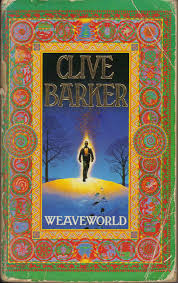
Later in my teenage-hood I was drawn out of the shadows into more middle-territory of fantasy and wonder, with Clive Barker. Weaveworld continues to be my favourite novel, because of the bravura of the writing and also because of the timing - I was a 16 year old and my future was a bright shining road for me, though a safe one. Weaveworld took me out of the humdrum - it made me grow-up, whilst telling me that it was okay to be an adult and still have a vivid imagination. So if anything it’s Barker who has the most influence on me, especially his depiction of the “weird” and there are moments of Barker in my books, more so than the oft quoted influence of Cornwell’s Sharpe and Buffy the Vampire Slayer, (of which I have either read none of or watched very little of to be influenced at all).
In more recent years it has been Steven Pressfield who has had the greatest impact, not so much the characterisation or tone of his fiction, but the battle-scenes which allowed me to follow my own method of writing war – using rhythm and pace of the language to imitate the beating heart or adrenalin, and the “dance” of battle. Which is how I look at battle-scenes – simply put they are ‘dances’, engaging and retreating and engaging again, brutal sometimes, while other times quite beautiful and breathtaking.

These days, I’ve been growing beyond the borders of the strange and the bloody, which is reflected in my reading habits and the projects I have on the go and in the pipeline.
So will I ever write a non-genre novel? I think so, one day. Purgatory and a future project called The Fixer of Clocks are steps towards more literary novels. But you know, at the moment I’m having too much fun to step away from the bravery of fantasy, horror and science fiction. Way too much fun!


“What sort of things do you think your readers would enjoy when they've finished your books?”

You know, this should be an easy question to answer, but like my books, it’s a little more complicated. The Secret War novels, even now, are not in a genre that has a spectacular number of subscribed writers. Imagine, then, what it was like when I originally wrote these books! There wasn’t such a genre as “historical fantasy” when I originally sent them around the agents in the Writers and Artists Handbook. Naomi Novik had yet to set out on her Temeraire sequence and Jasper Kent didn’t arrive on the scene until after the Secret War was published.
Because my books cross, perhaps, two or three genres, if my readership went on from the Secret War novels it would be like the fragmenting of a group of partygoers, after the house party has finally come to an end – each going their separate ways. Some would gravitate towards the historical adventure/war genre inhabited by your Cornwell’s, Pressfield’s, O’Brien’s and Iggulden’s. Others would head for the stock horror troupes, vampire books and such (though please, I wouldn’t suggest anyone head to the likes of Stephanie Myer and the legion of “urban fantasy” writers out there – my stuff just aint the same as that!). Others may even head off to the fantasy/science fiction worlds of which there are so, so many.
It’s a tough question to answer because there are many books that exist on the different literary roads, while there are not that many that sit on the cross-roads, thumbing a lift to anyone who would pull over. My books are like that – they’re like hitch-hikers, they have no home until someone picks them up for that long dark journey into the unknown.


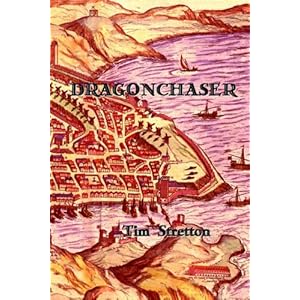
And so to Tim Stretton, another writer who likes to go down paths unknown. Tim’s novel, Dog of the North, is a fine example of world building – Mondia is a fully realised fantasy land of epic proportions, which was visited first in the novel, Dragonchaser. But I would like to ask Tim, which came first? The world or the plot? And why? And would he ever consider writing his books the other way around?
Finally, as it is something that effects us all and Tim has had some experience in this area, I would like to ask him whether self-publishing via e-books is something that has become not only more viable, but also more appealing?

Monday, 11 October 2010

Round One

The Round Robin interview kicks off today with me asking a question to Dee Swift, author of The Lady's Slipper, a gripping novel of beauty and faith set during the Restoration. I'm very jealous of the skill and commitment that is required by the historical novel. It seems to me to be the pinnacle of writing ability to capture the past accurately and yet make it current and meaningful for the reader.

So, Dee, was it only ever historical fiction that appealed to you? Did you always want to write novels set in the past of England? What is it about the period that appeals to you, and how do you communicate that passion to the reader?


So, here's the order for the Round Robin:

Dee Swift
MFW Curran
Tim Stretton
Brian McGilloway
Alis Hawkins
Ciara Hegarty
Doug Worgul
David Isaak
Ryan David Jahn
Eliza Graham
Frances Garrood
Faye L Booth
LC Tyler
Aliya Whiteley

An impressive line-up!